Mesmerization and cracks in time

You may have noticed a dip in activity around these parts as of late.

I'd like to attribute it to several months at sea with only occasional wifi access. Or maybe an extended session with a purloined case of Plantation Pineapple Rum. But alas, no. Shit just got busy, as shit does.

To help stay sane during this stretch, I leaned heavily on a new ukulele. She's a real beauty, wonderfully figured willow, in the tenor size: a bit bigger than the itty bitty soprano most people think of when they think of a ukulele. To be clear, when it comes to the ukulele I'm not what you'd call "talented." Or even "a musician." I mostly just fall in love with certain chord progressions and loop them over and over. There's nothing fancy about it whatsoever. As Leonard Cohen put it: "It goes like this, the fourth, the fifth, the minor fall and the major lift." But it's mesmerizing to me. And it can make 20 minutes feel like I just spent an entire weekend away.

The other thing I started dabbling with recently is meditation. I liked it from the start, combining the breath awareness of yoga (and freediving for that matter) with the blankness of driving four chords into the ground on a ukulele. In its own way, meditation is mesmerizing too. An hour spent meditating can feel like a lifetime, in the best possible way. 

It's an interesting word "mesmerize." One of those that sounds like what it means. It originated with Franz Mesmer who was a German physician (1734-1815). He had a theory of energy transfer between animate and inanimate objects that he called animal magnetism. In 1843, Scottish physician James Braid expanded the theory to include hypnotism which... ah hell, Wiki page here.  My main point: Mesmerization = Hypnotism. I'll move on. 

When we're mesmerized by something, it's like discovering a tiny crack in time – a place to explore, or just hide within, that's completely removed from the machinations of the day. Fly fishing, drum circles, laying on the ground and looking up at the trees...they've all provided me with spiritual hidey holes over the years. Places to expand or recover or just chill tf out. 

Invisible Oregon, the video below, did the same thing for me this morning. 

For the record, I didn't think I needed to see any more time lapse videos in my lifetime. Of course many of them are beautiful.  But at a certain point, I came to the conclusion that I've probably gleaned everything there is to learn from fast clouds and twitchy trees. I was wrong about that.

Invisible Oregon was shot by Sam Forencich using infrared converted cameras. They capture the infrared portion of the spectrum which produces amazingly ethereal imagery. It exists somewhere between conventional and thermal photography, both technically and visually (here you go nerds). 

But "hey, pink trees!" is far from the whole thing. Sam's landscapes are stunners, the edit is fantastic, and the sound design takes it all to a higher level. 

I truly find it, yep, mesmerizing. If you could use a little escape, I'd suggest full screen mode, some headphones, and seven uninterrupted minutes to climb inside. 

Created entirely with infrared converted cameras, Invisible Oregon is a study of light across time and space. As the sun rises over the State of Oregon infrared light travels across the earth revealing the subtleties of new growth and the dramatic intersection of sky and earth. Witness for the first time this diverse and interconnected landscape rendered from light we can't see with our own eyes. Filmed and Produced By Sam Forencich https://www.samforencich.com/ Sound Design By Travis Forencich Executive Producer: Jeff Frost http://www.jeff-frost.com/ Advising Producer: Michelle Lanier http://www.michellelanier.com/ Ever since my youthful days of “experimentation” I've often wondered about the nature of reality. Those of you that still believe in science understand the limitations of our perceptions, and it's no secret that many creatures exceed our abilities to interpret the world around us. The idea that we have to process the sensory data coming into our brains makes it seem like we are already a step removed from the real world. So what exactly are we missing? What do animals experience that we can't, and how do our human perceptions vary from person to person? While this film does nothing to answer these questions, time-lapse and infrared photography do, in a metaphorical sort of way, extend our sensory abilities so we can imagine a world beyond ours. Ultimately I think this is what draws us to these forms, not to solve the mystery, but to flirt with it's boundaries. Sam Forencich Invisible Oregon was filmed with an infrared converted Nikon D750, and a Canon 5D MarkII Conversions by: Kolari Vision: https://kolarivision.com/ Motion control rig by Dynamic Perception: https://www.dynamicperception.com/ Post production: LRTimelapse: https://lrtimelapse.com/ , Adobe Lightroom 6, Adobe CS6: After Effects, Photoshop, and Premiere Pro

Paul's Boots + the Many Feet that Filled Them

I was in southern California last week for a photoshoot. We were about five miles off the main road in the mountains of the Cleveland National Forest when I heard a voice: "That's my hula hoop!"

It came from an area where I knew we didn't have any crew. I looked over and saw two people coming up a trail that I didn't realize was there. If you're going to overhear a single snippet of dialogue in a wilderness setting, "That's my hula hoop" is about as good as it gets. Two fully loaded backpackers, a man and a woman with dreadlocks both, passed by with a friendly "hey bro" and disappeared down the trail to the south. 

That's when I first noticed a small trail marker: Pacific Crest Trail. We were on the famed PCT and I didn't even know it. The trail runs the distance from Canada to Mexico (the PCT is the trail in Cheryl Strayed's book, and the movie, Wild). I like to think that the hula hoop duo started their journey on the British Columbia border. When I saw them they were about 20 miles from Mexico. 

Anyway, this sighting got me thinking (again!) about thru-hikes and routes like the Pacific Crest Trail, or the Appalachian Trail, or even the Superior Hiking Trail along the north shore of Lake Superior. On my flight home from San Diego, I pulled out an issue of Backpacker magazine that I had been carrying around unread for a few weeks. And what do you know, coincidentally (or sign from the universe?) it was a special thru-hike issue.

Now, getting to my original point: Paul's Boots!

One article that hit me especially hard was a tribute called Paul's Boots. It's about a man named Paul Evans whose dream it was to hike the Appalachian Trail. He never made it. But Paul's boots did and it makes for a great read

It also makes for a great documentary which you can watch below. The film tells the tale of Paul's Boots, of course, but then also expands so far beyond that – telling the tales of all the wonderful people who volunteered to bring Paul with them on their journey.

The AT stretches 2,181 miles. And yet, the sense of community and caring is about as tight-knit as you'll find. This story captures it all so well.

We all have dreams. Paul's dream was to hike the Appalachian Trail. Last year, Paul passed away before he could make his dream reality. But that's not the end of this story - it's the beginning. He left behind three pairs of polished hiking boots and a backpack packed for his dream hike: the 2,189-mile Appalachian Trail.

Here's to craftsmen

Oh I like craftsmen. Especially those who combine art and utility with a personal passion for some weird subset of something or another.

In the past I've written about a maker of musical ice instruments, a kayak builder who uses ancient methods, and I seem to remember some beautiful kooks who crafted an entire orchestra out of vegetables, although damn if I can find the link.

Today, we've got Mike Parris. He was a Carnegie Mellon robotics engineer working on Mars rovers (smarty pants!) when he decided it would be cooler to craft custom skis and snowboards for people instead. Today he runs Igneous Skis out of Jackson, Wyoming. They limit production to around 100 pairs a season which means these are some freaking beauties. 

In 1996, Mike Parris worked as a robotics engineer at Carnegie Mellon. While he developed technology used on the Mars rover expeditions, his friends began building custom skis that would allow them to ride the terrain Jackson Hole had to offer. Mike pitched in with his mechanical expertise now and then to help design the equipment and process, ultimately leaving behind his career in robotics to create handcrafted skis that would forever leave a mark on the ski industry. Igneous Skis was founded by Mike's friend, Adam Sherman, and is now operated by Mike Parris in Jackson, WY where he customizes only 100 pairs of skis each season, carefully tailoring each pair entirely by hand. NeverGroomed.com offers skiers an elite collection of handmade skis designed to perform in the wildest mountains and most demanding conditions. By embracing the labor-intensive craftsmanship of smaller, independent brands, NeverGroomed is making fresh tracks in an industry dominated by mass-produced skis. A film by WZRD @wzrdmedia Produced by NeverGroomed.com Director Galen Knowles @gknowproductions Executive Producer Jason Maupin Additional Cinematography Phil Hessler & Ian Avery-Leaf Grip Nikki Hessler Music Craig Murdock: https://soundcloud.com/craigmurdock Royal Deluxe from MusicBed.com Audio Austin Federa Visit nevergroomed.com/ igneousskis.com/

A closer look at mountains and other things

It's easy to not see mountains.

I don't mean, like, "what did I just trip over?" and then you turn around surprised to find the Grand Tetons laying there.

I mean it's easy to not see mountains for what they are. For what they're made of. It's easy to overlook the kabillion bits and pieces that make up the panorama we typically see when we "see" mountains.

How come? Well, mountains are big broad bastards. Overwhelmingly so. Wrapping our head around them requires far-focus, a suspension of disbelief, and some serious peripheral chops. It seems that clearly establishing a sense of distance is key to understanding mountains at all. 

But unfortunately this sense of distance also creates, I don't know else to say it, a sense of distance.

I've spent thousands of hours in the mountains – boarding, biking, backpacking, catching brookies, and just generally dicking off. I'm wildly comfortable at elevation. I feel as one. But still, when I'm there I tend to look at a mountain range as if I'm looking at a photo of a mountain range. I take in the beauty, of course, but abstractly so. Like most, I tend to focus on the tallest peaks, the deepest valleys, and the farthest horizons: happily wallowing in the wallop of scale while I miss the rest.

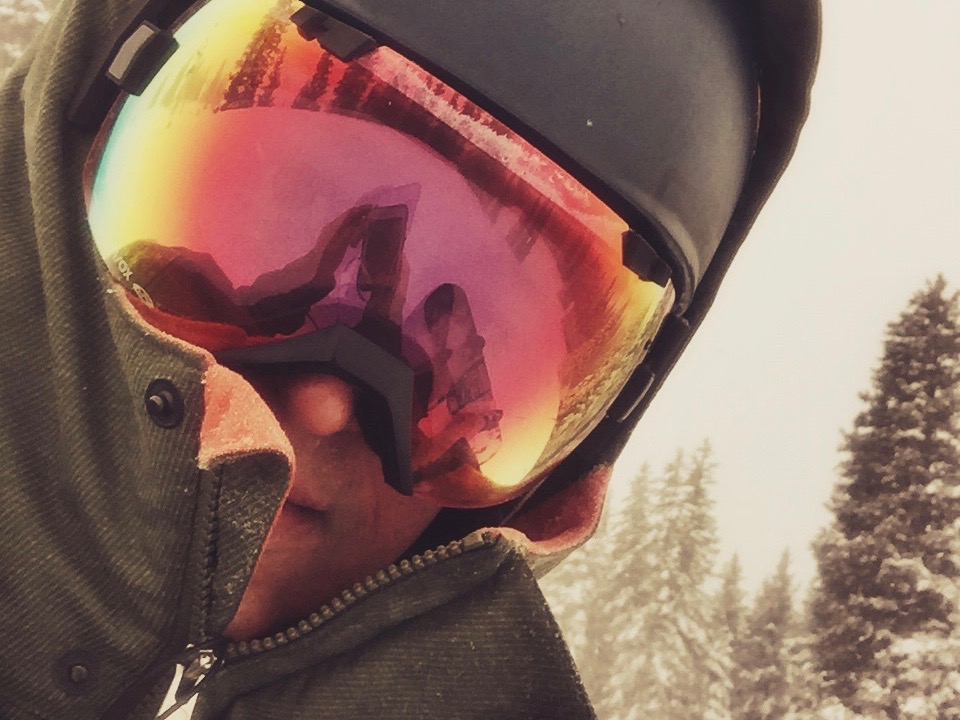
What got me on this path? I spent last week in Utah which included some time in the Wasatch Mountains. Over the course of seven days, Big Cottonwood Canyon got 61 inches of snow. Of course this sort of weather system makes for damn fine snowboarding. It also makes for piss-poor visibility. 

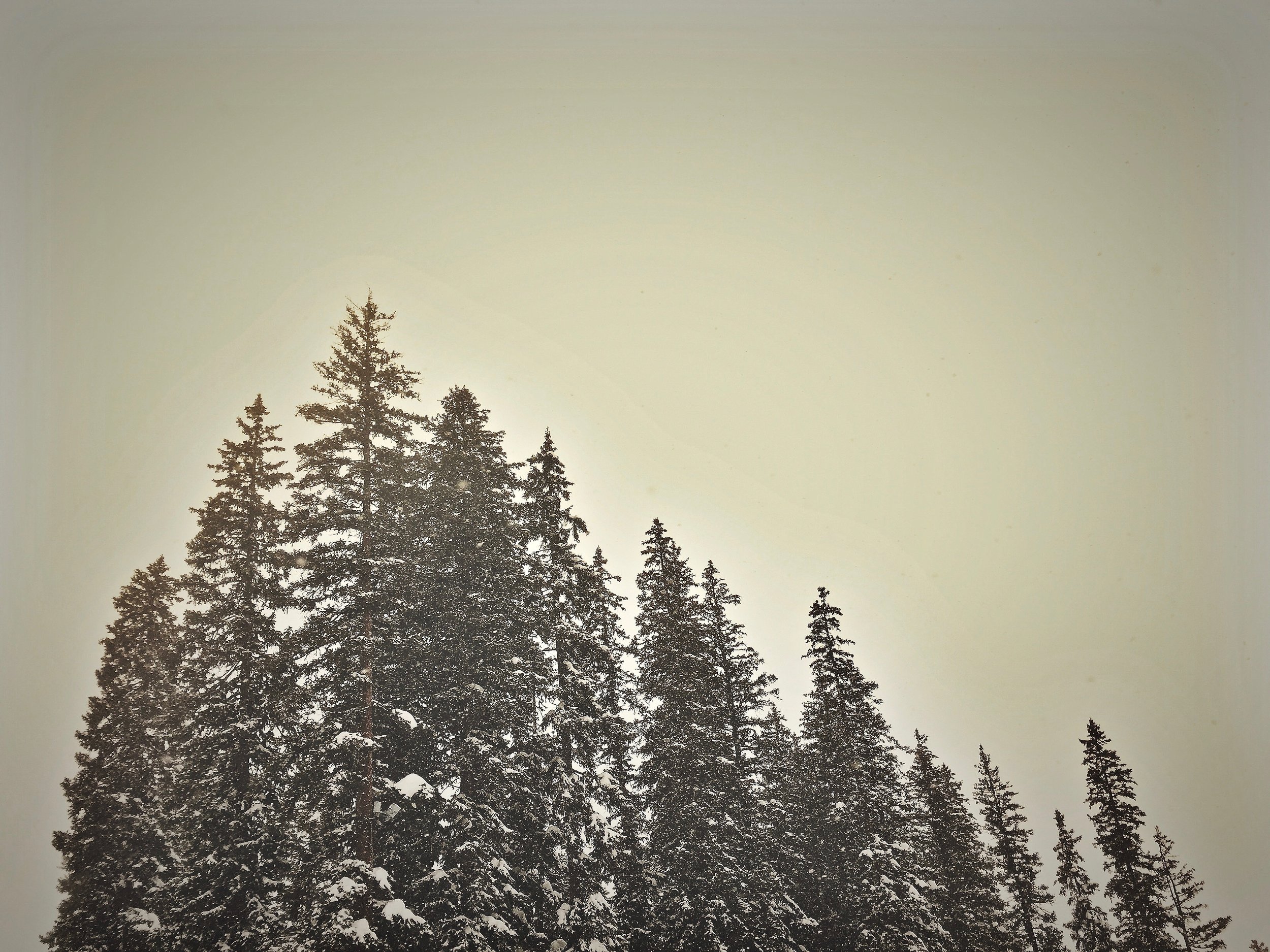
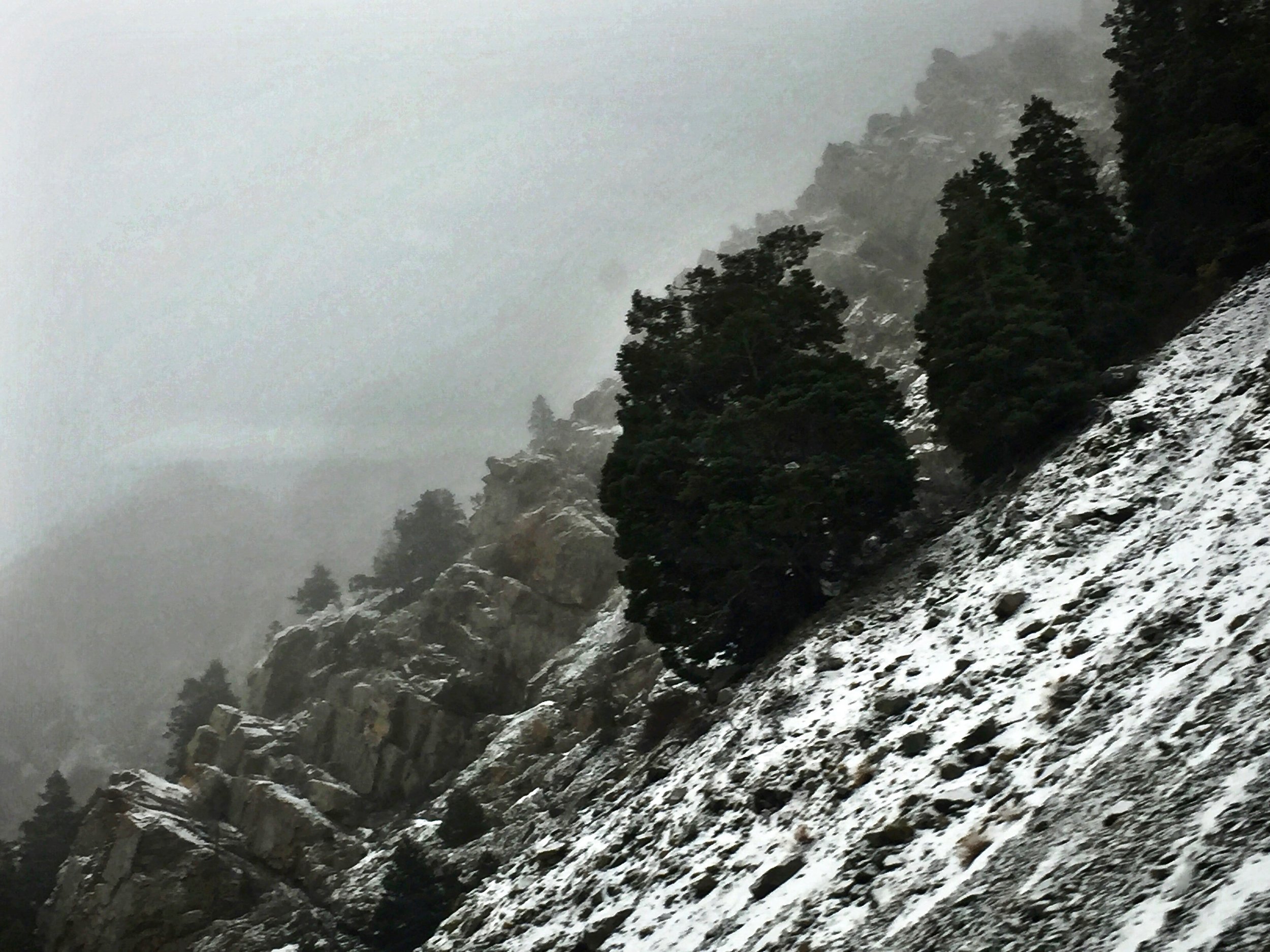
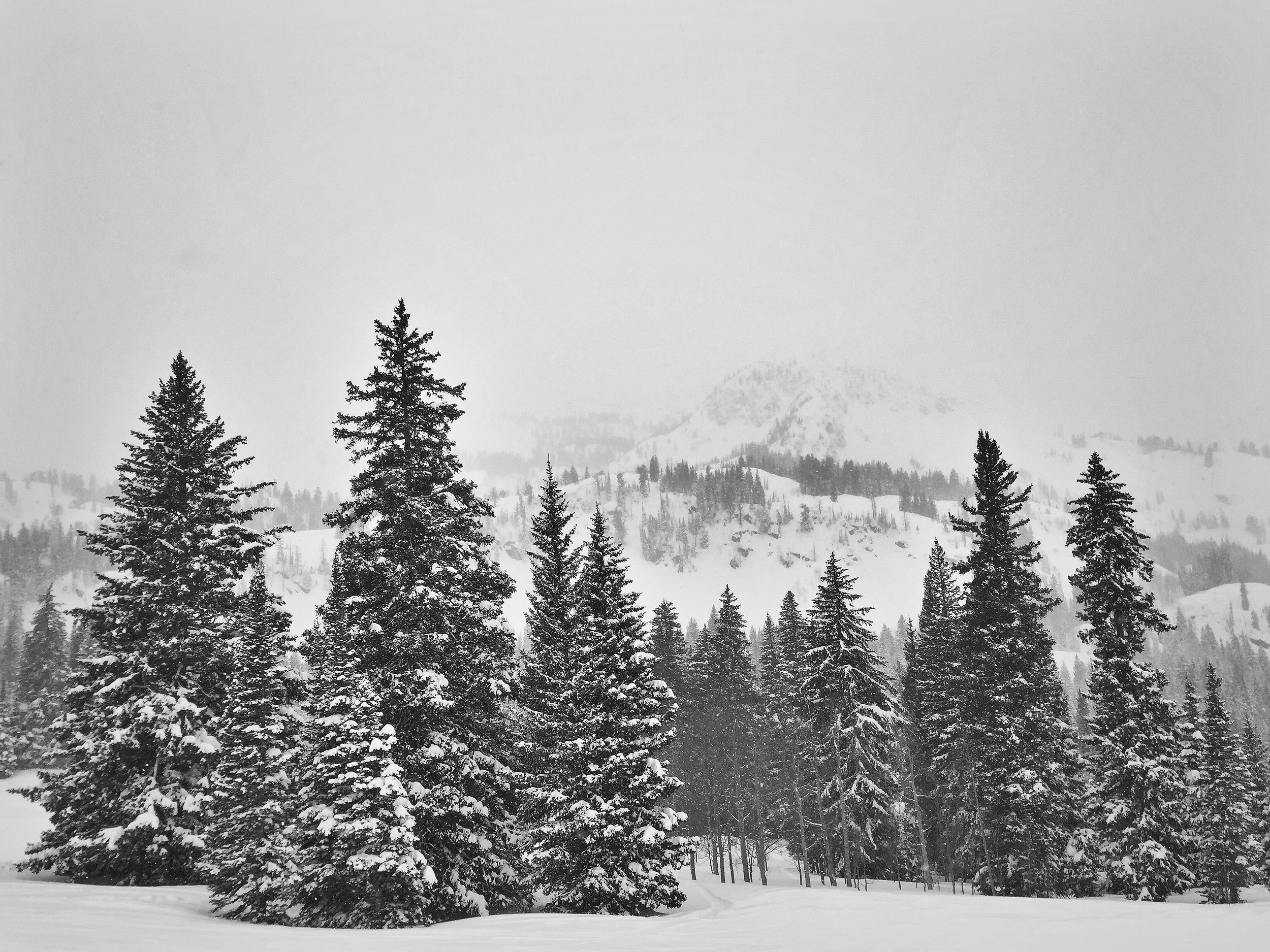
As a result, there were no stunning vistas in the Wasatch Range last week. No panoramic photo ops from the chairlift. No mountain's majesty, purple or otherwise, in any direction. There was just snow and clouds and, down in the valley, fog.

And so that's how things went down – me in the mountains, slicing long soft turns through an empty grey. 

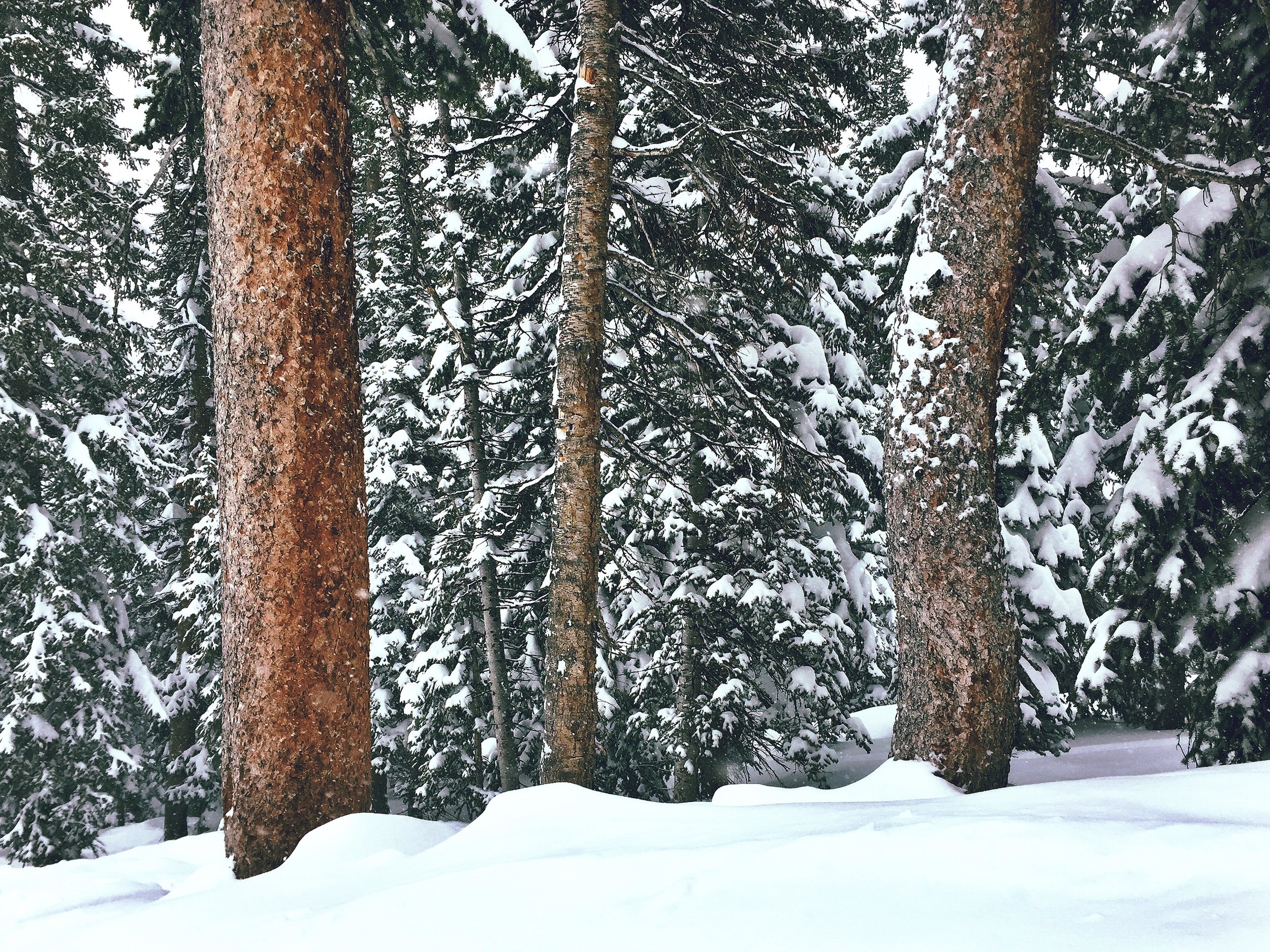
I have to say it took a while for my mind to recalibrate, for me to stop looking toward a non-existent horizon for perspective. Over time though, I gradually surrendered my need for the far-away for what was right in front of me: dark stabs of douglas fir, non-negotiable walls of stone, the gloved transfer of snow from mountain to mouth.

Once I noticed these smaller things, of course, I couldn't stop noticing them. Thanks to the weather's veil, my view had shifted from macro to micro. I found myself seeing, and maybe even coming close to understanding, some of the individual pieces that make up the usually inscrutable mountains.

Hoping to find a lesson here, or at least an obvious metaphor to jump to without a properly fleshed-out transition (as I do!), I'm left with this:

We're living in stormy times; an era of uncertain horizons. I feel it every day.

I'm saddened that the forecast for tomorrow, January 20th, 2017, calls for more of the same.

I know that eventually, inevitably, the sky will break. So I plan to keep looking outward with patience. But in the meantime, I'm going to appreciate what's right in front of me too. The kabillion bits and pieces of life are far too important to overlook while I'm busy scanning the horizon for something more.